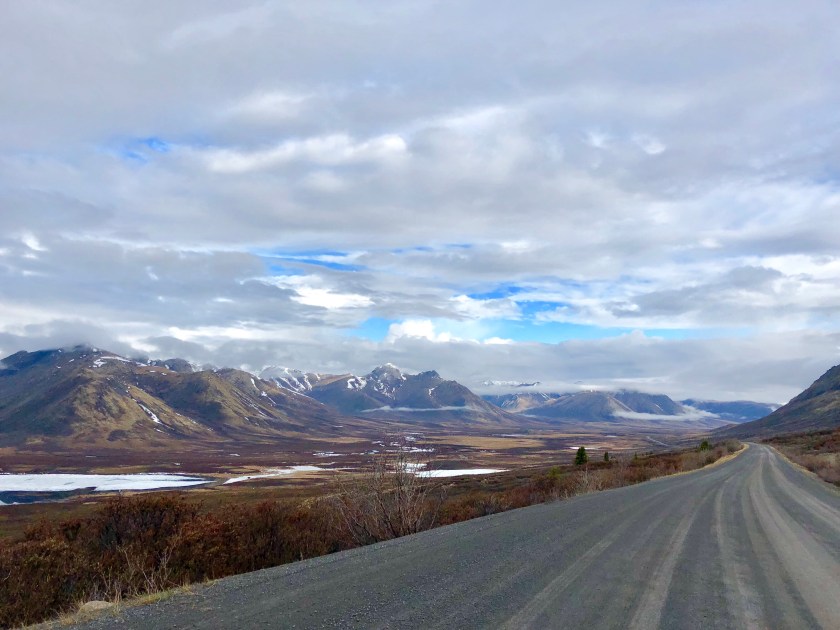
After reaching Dawson City, I decided on another side trip, this time up the Dempster Highway, a recently completed 450 mile gravel road that ends at an Inuit village on the Arctic Sea. The road crosses the Arctic Circle about half way up it’s length. I had visited the First Nation ( Inuit ) Visitors center in Dawson City, The polite Inuit Natives encouraged me to head north to visit ( and spend money) at their seaside village at the end of the road. After all the dirt roads I’ve traveled on, I couldn’t face the almost 1000 miles round trip on it. I decided to fill up with gas in Dawson City and drive as far north as I could prudently go and still make it back on one tank of gas, my truck will go 400 miles plus on a tank so I decided I’d drive 150 miles north and camp.
I had camped the night before the drive just below the final mountain pass into the Arctic. This subalpine zone is referred to as the Tiaga, the ecosystem where the trees start to thin out and give way to Arctic Tundra. The Inuit ladies in Dawson had warned me snow was predicted in those final mountains. I waited till the next morning to head out. This range is the last of the Rocky Mountains I started following north in Southern Arizona three months ago. I had reached the Northern most tip of this 5000 mile long string of peaks.
There is only one gas station about 300 miles up the road, and other than that , there’s nothing on the road but endless wilderness. I climbed the mountain pass, leaving the last trees behind. With towering snow capped peaks on either side, I slowly descended out onto what is called the North Slope, all rivers here drain into the distant Arctic Ocean . Except for some taller brush along water ways, the ground here is all Tundra, moss and tiny plants no more than 12 inches high. The Tundra stretches to the horizon in all directions, the only voids are on the higher slopes and mountain tops where bare rock prevails. I was in the Arctic.
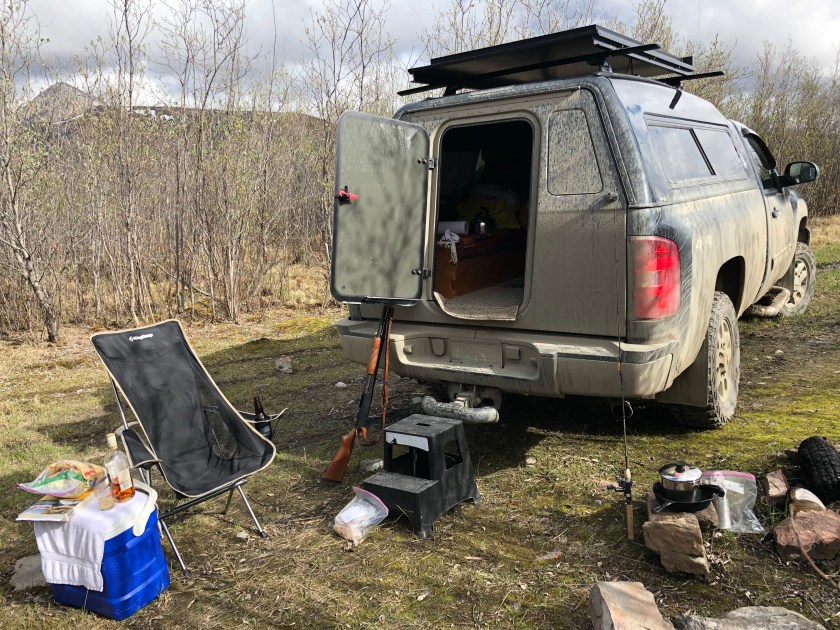
I camped by a rushing glacial fed river close to the road. Although I carry my own drinking water, camping by a river provides access for washing, etc. Normally I avoid camping near a road, but in this case, the sound of that one vehicle every hour or two was a comforting sound of fellow humans in this vast wilderness.
I went for a hike the first morning, ( the sun never dropped below the horizon at night, it never got dark ). I wandered 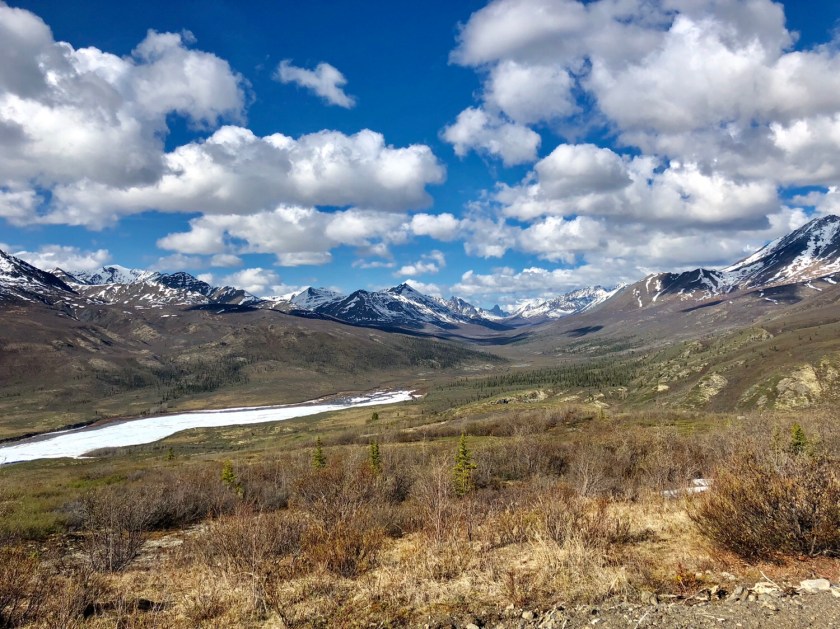


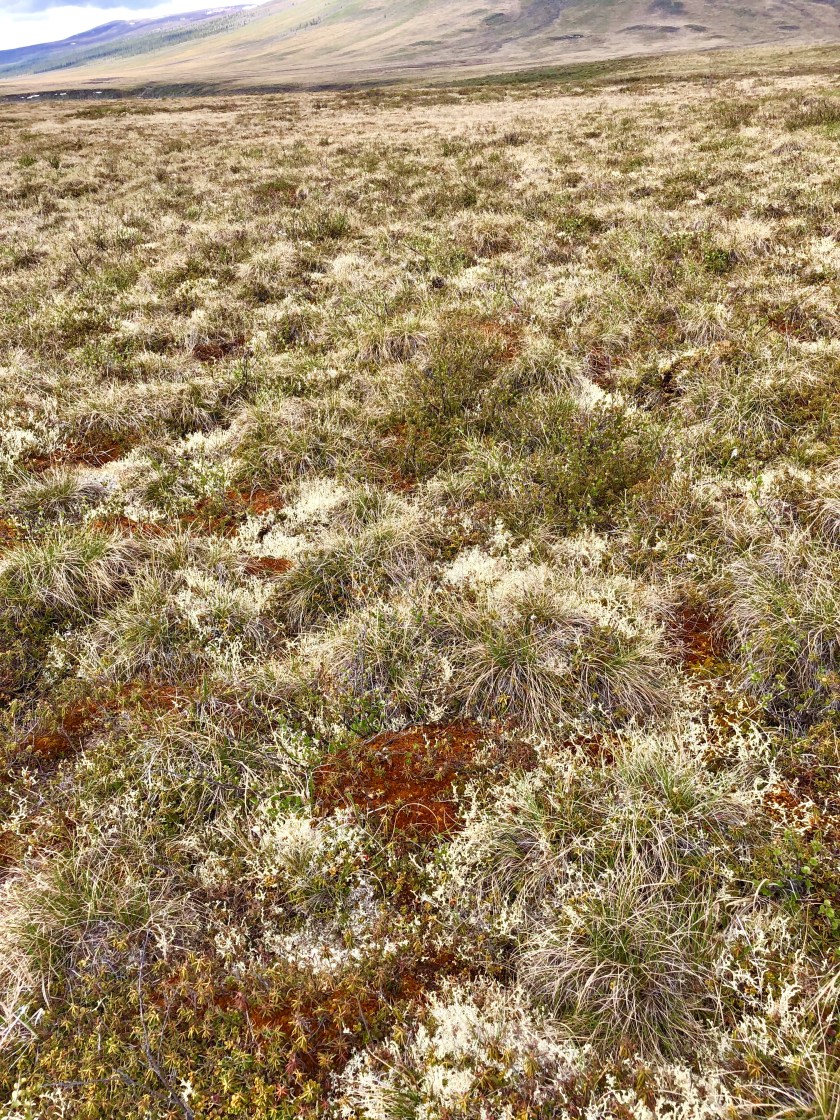


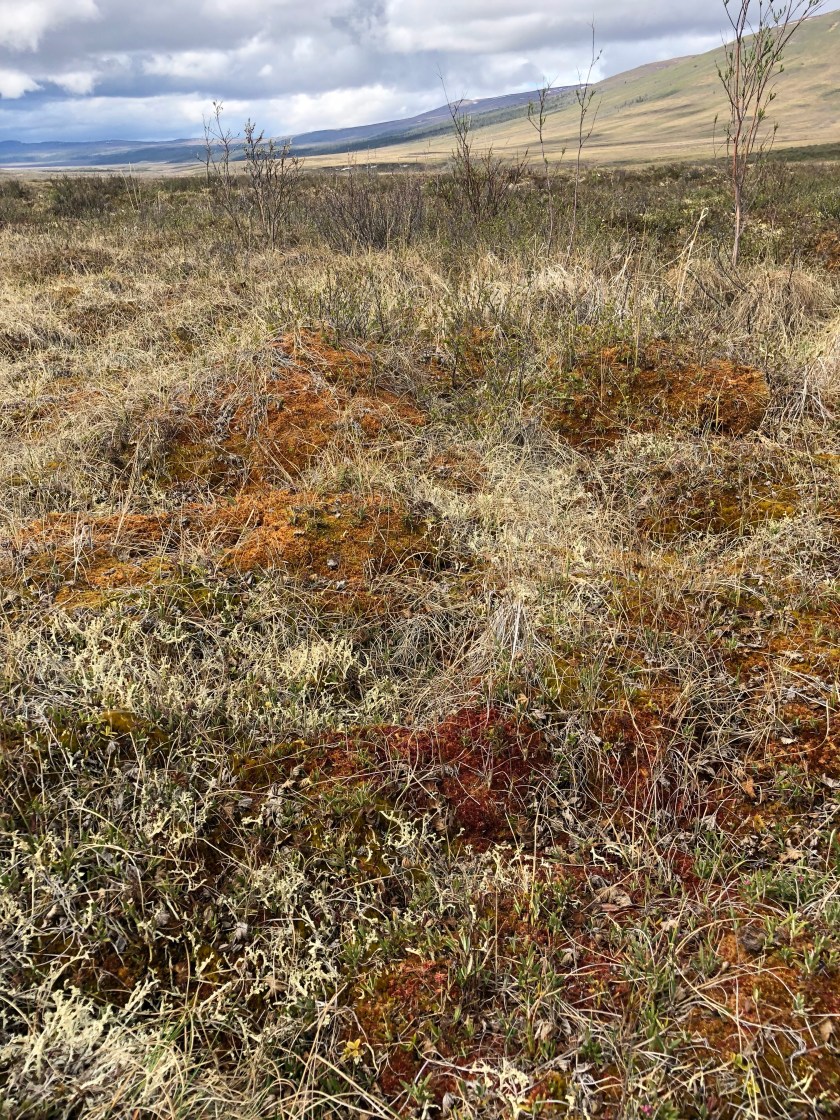

 miles out into the open Tundra. This is the area where spring and fall brings mass Caribou migrations with thousands of animals passing thru. I had missed the spring migrations so I had the endless plains to myself. The occasional ponds were full of nesting ducks and even waders like Plovers . These North Slope uplands are considered prime Grizzly Bear habitat, big game hunters from all over the world come here for the fall hunt. I had discovered bear sign near my campsite so I knew they were around. I figured they couldn’t sneak up on me out on the open Tundra.
The Tundra was surprisingly hard to walk on, what looks like smooth solid ground is actually soft , spongey and often wet . Because of the permafrost just below the surface, water can’t drain away, resulting in a sort of continuous swampy ground. About every 10 paces I would sink into ankle deep hidden puddles . Fortunately I had my rubber boots on.
The Blackstone River was full of fish. On my third cast I caught a nice Arctic Grayling. I subsequently caught several more, These Graylings are renowned for their good eating, unfortunately I didn’t dare clean and cook fish at my campsite, that would surely attract bears. I’d been warned by a Game Warden that a Grizzly can get in a locked truck , so to be on the safe side, all fish were released back into the river. So much for a nice fish dinner.
One of my goals for this cross country journey was to reach the arctic, this side trip fulfilled that dream. I have to say that this was one of the highlights of the my long journey.
 Philonthego.com